Lee Through the Years
Take a trip down Lee’s memory lane and witness over 100 years of jeans history.
Surprisingly, Lee didn’t begin by making clothing—or manufacturing anything at all for that matter. Established in 1889 as a wholesale mercantile of groceries & goods to the West, The H.D. Lee Mercantile Company expanded gradually, and in 1912 began to manufacture work wear. Problem-solving designs earned Lee a reputation for quality, service and integrity. The success of Lee’s workwear business eventually transformed the company into a worldwide leader in the apparel industry, known for superior comfort and stylish versatility.
Show moreThe BeginningHenry David Lee
Henry David Lee and four business partners established The H.D. Lee Mercantile Company in Kansas. They sourced groceries and other staples from around the world and packaged them for distribution to dry good and grocery stores under the Lee brand.
As the region’s population grew, demand for goods that couldn’t be grown or made locally increased, and Lee expanded its offerings to meet consumer needs. Dry goods merchants could order nearly anything from The H.D. Lee Mercantile Company’s 1899 Notions Catalog—from air rifles, apple butter, baseball mitts, bib overalls, coffee grinders and fabric to maraschino cherries, stationary and school supplies, toilet paper, whistles and Worcestershire sauce. Between 1900 and 1909, Lee established The H.D. Lee Flour Mills Company, Lee Hardware Company, and Kansas Ice and Storage.
Show more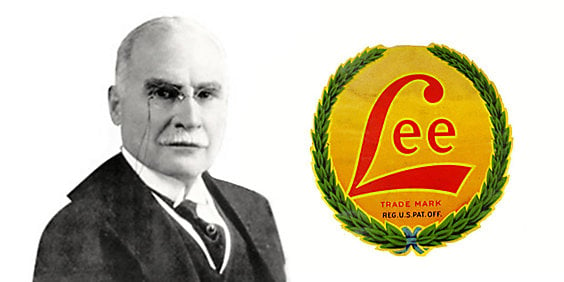
FIRST LEE GARMENTFACTORY OPENS
Recognizing the possibility of volume business in overalls, The H.D. Lee Mercantile Company opened its first garment factory in Salina, Kansas, to produce overalls and work jackets.
The success Lee experienced making quality work wear eventually changed the focus of the company from a wholesale grocery and dry goods distributor to an apparel manufacturing giant.
Show more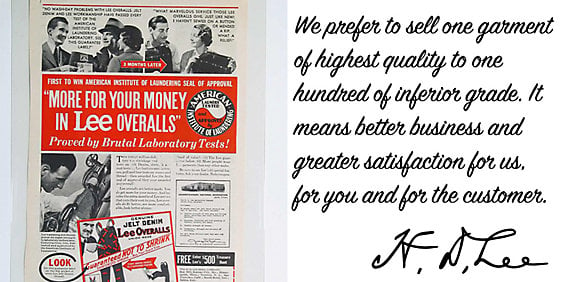
First one-piece CoverallLee Union-Alls
Lee created the first one-piece coverall: the iconic Union-Alls are designed to protect clothing both below and above the waist.
Because cars were not as dependable as they are today, drivers doubled as auto mechanics. Crawling under automobile dirtied fine clothing both inside and out. When a mechanic delivering autos to a Salina dealership heard about Lee's new overall factory, he asked the factory superintentdent to sew a jacket to a pair of pants—akin to the popular one-piece “Union Suit” undergarment but for outerwear. The rest is history. The following year (1914), Lee registered the term, “Union-Alls” with the U.S. patent office and added them to its product line. Within two years, as Lee ads suggested, there was "a suit of Union-Alls under the seat of every auto."
Show more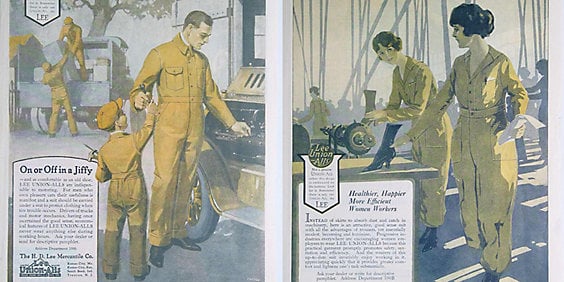
UNION-ALLSDRIVE EXPANSION
As a result of the Union-Alls popularity, The H.D. Lee Mercantile Company grew its manufacturing capabilities to keep up with demand.
The H.D. Lee mercantile Company looked beyond the small community of Salina, Kansas for a larger labor force. New factories opened in Kansas City, Missouri; South Bend Indiana; Trenton New Jersey and Minneaplois, Minnesota. From 1915-1919 all Lee factories focused on producing just Lee Union-Alls to meet demand.
Show more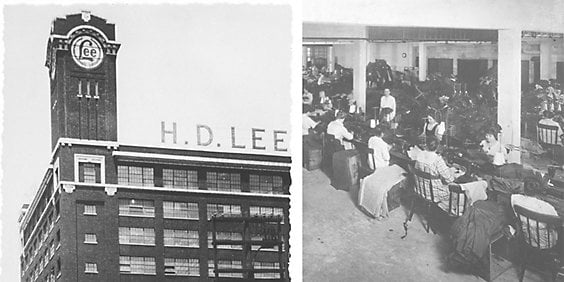
NEW HEADQUARTERSKansas City
On March 17, 1917, The H.D. Lee Mercantile Company moved its headquarters from Salina, Kansas to Kansas City, Missouri.
Taking advantage of the metro's larger work force and better freight rates, the new 9-story headquarters opened at 20th & Wyandotte.
Show more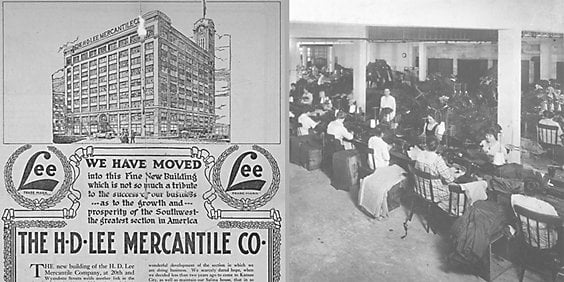
BUDDY LEEADVERTISING ICON
The Buddy Lee doll was introduced to promote Lee overalls. Over the next 40 years, he helped to introduce new products offered by Lee.
Becoming a promotional success at county fairs and in store windows, Buddy Lee dolls were first made of composition and later of molded plastic. When it became cost-prohibitive to manufacturer the doll, Buddy Lee was discontinued in 1960. Buddy Lee returned in 1998 to promote the company’s Can’t Bust ‘Em Dungarees line, aimed at 17- to 22-year-old males. Buddy Lee, "Man of Action" appeared in ads as a heroic figure who survived all kinds of certain doom, prompting his human co-stars to marvel at the durability of his jeans. Lee offically retired Buddy Lee in 2006.
Show more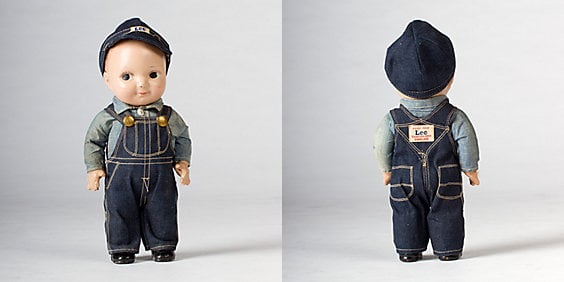
COWBOY PANTSLEE 101
After consulting with working cowboys and champion rodeo riders, Lee introduced its cinch-back ‘Cowboy Waist Overalls' of 9 oz. denim for men (101) and boy’s (101B).
Lee established brand loyalty early with current and aspiring cowboys and rodeo champions, in part by improving fabric, fit and finishes to meet their specific needs. Copper rivets were replaced with "scratch-proof" stitching to reinforce back pockets, protecting saddles—the cowboy's most valued possession. Lee Cowboy Pants later became known as Lee Riders.
Show more
JELTBEST DENIM IN AMERICA
Working with Canton Mills of Canton, Georgia, Lee developed the strongest and bluest denim in the market for durable work and western wear.
Used exclusively by Lee, this new 11.5 oz. denim was made by twisting the yarn tighter than previously made and engineered to be harder to snag, tear or rip yet pliable and comfortable. In 1931, Lee changed the name to “Jelt Denim."
Show more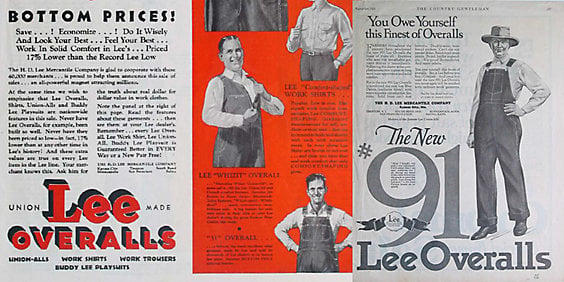
NEW TECHNOLOGYZipper Fly
Lee was the first garment manufacturer to use a 'hookless fastener' in cowboy pants, overalls, coveralls and playsuits.
Lee held a national contest to name its new zip-front overalls, coveralls and playsuits. The winning name was 'Whizit,' based on the sound it makes. Advertisements using Babe Ruth and other well-known celebrities helped the Whizit gain immediate popularity. The proof was in the numbers. In a photo taken after the 1927 National Corn Huskers Contest, eight of the ten winners were wearing Lee Whizits.
Show more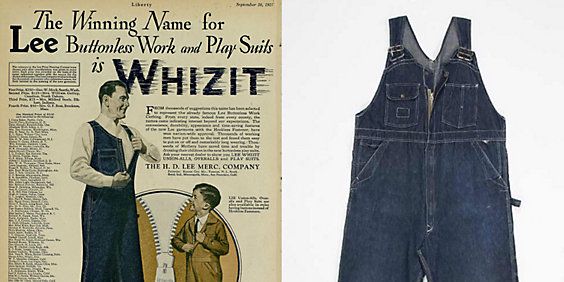
BUILT AMERICALEE WORKWEAR
Lee made the workwear worn by America's work force.
"The Great Lee Success Story" advertisements celebrated workers wearing Lee products in manufacturing plants from coast-to-coast, ranging from steel and automotive to railroad and aviation. This led to Lee's slogan: The Jeans that Built America. In 1937, Lee became the nation's largest manufacturer of workwear with sales at $6.4 million.
Show more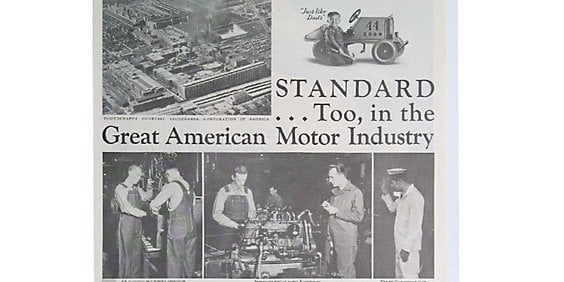
BELIEVE IT OR NOT!LEE PROVES QUALITY & DURABILITY
Lee's Jelt denim survived Ripley's Believe It or Not! 26-mile crawl across untreated concrete.
To prove Lee's continued dedication to quality and durability, Ripley put Lee's Jelt Denim Overalls to the test. The buttons held their shape after being ironed with a 5-ton steamroller. The denim survived a 26- miles crawl across untreated concrete. One man stood in the pockets of overalls worn by another and the stitching stayed secure!
Show more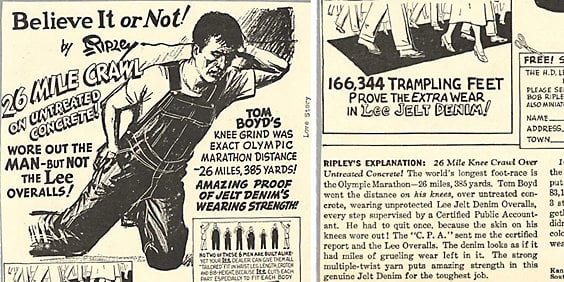
BIG SUPPLYLEE JOINS THE WAR EFFORT
During World War II, Lee supported the war effort, manufacturing shirts, pants and flight suits for the United States military.
Continuing to advertise through prosperity and depression, a full-page advertisements in LIFE Magazine for Lee workwear included the following notices: "War conditions make it impossible to meet the growing demand for Lee Work Clothes. Your Lee Dealer is receiving his fair share of all we are able to make after the needs of our men in the armed forces have been supplied. If your Dealer is out of the Lee you want please ask him to reserve one for you out of his next shipment."
Show more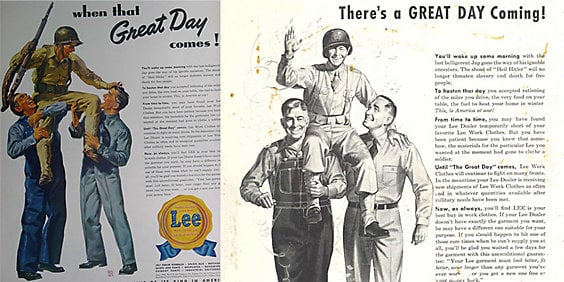
LEERIDERS IS BORN
1946 ushered in the birth of the "twitch" label.
With the new 101 Lee Riders, Lee introduced their now famous “Lazy S” decorative stitching-still in use today on the back pockets and the “Twitch” leather label.
Show more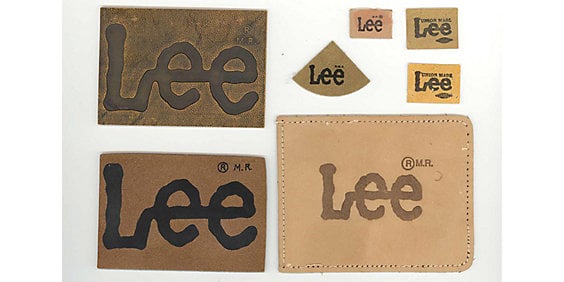
FOR THE LADIESLEE JEANS FOR WOMEN
Lady Lee Riders were introduced to the market.
In 1947, the untapped women's jeans market welcomed Lady Lee Riders, “Authentic Cowboy Pants, button-fly, Sanforized, 8 oz. coarse weave denim.”Made with the same button-front fly, 5-pocket construction as men's Riders, Lady Lee Riders came with the same guarantee to fit or your money back. The primary difference? Lady Lee Riders were made with a small dart in the yoke to create a more fitted waist for the female physique and with a fuller seat and hips than men’s Riders.
Show more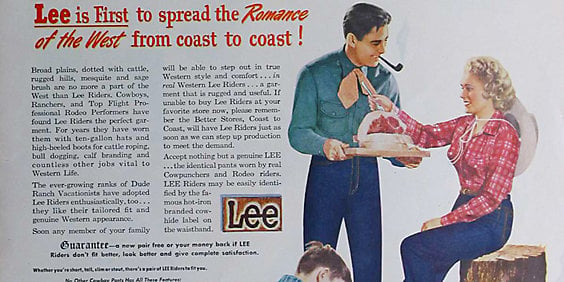
BIG TEXLEE GROWS ITS MARKETING
Lee outfited the 52-foot tall Big Tex at the 1952 Texas State Fair
In 1952, Lee took on 364 hours of work to sew a shirt and pants for Big Tex, the 52-foot tall symbol of the State Fair of Texas. The jeans alone, the largest authentic Lee Riders ever manufactured, required 100 yards of denim and 5,900 yards of thread.
Show more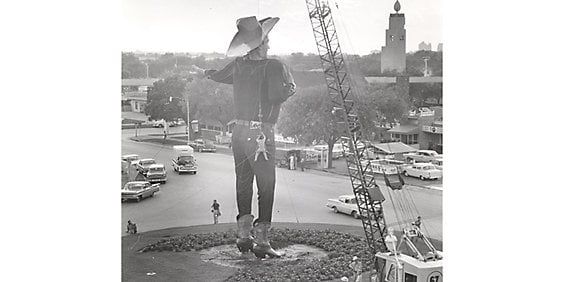
LeeJEANS FOR ALL
Denim's shift from workwear to pop culture fashion began.
Worn by movie stars like Marlon Brando in 1953’s “The Wild One” and James Dean in 1955’s “East of Eden” and “Rebel Without a Cause,” jeans became a symbol of American youth, boosting sales dramatically.
Show more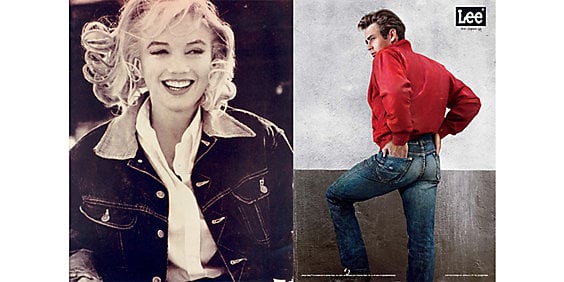
DRESS UPLEE WESTERNERS
Lee offered a new slim and trim, authentic western cut with a "dressed up" feel.
Lee Westerners were the first dress-up jeans and jackets ideal for sports, hobbies, campus, on the job, or in the saddle. Made of Lee's trademarked Westweave fabric, this lines created a new concept in slim, trim, authentic western cuts pants and jackets. Rodeo champion Casey Tibbs served as Lee's spokesmodel. In 1960, Lee offered Lady Lee Westerners for "gals on the go."
Show more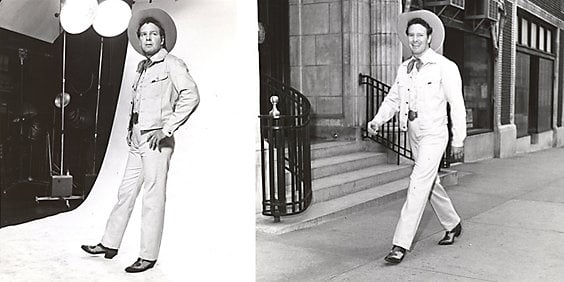
GROOVYLEESURE'S FASHION SILHOUETTES
Fashion needs of high school and college students were met with national advertisements offering the new Leesure's trim, "skin tight" silhouettes.
Supporting the new tag line "The Clothes You Need for the Life You Lead," Lee added the promise of fashion to its longstanding quality guarantee—all at an exceptional price.
Show more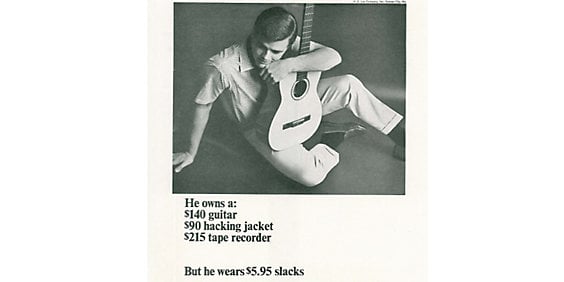
SIGN OF THE TIMESBELL BOTTOM JEANS & PAINTER JACKETS
Bell bottom jeans and painter jackets became popular on the college scene.
Unisex styles and new fads in overalls—from college girls wearing them as ski wear to girls wearing then cutting off at the knees—drove Lee to produce its first line of fashion overalls and a variety of bellbottom styles for men and women including, the reversible Gemini Jean set.
Show more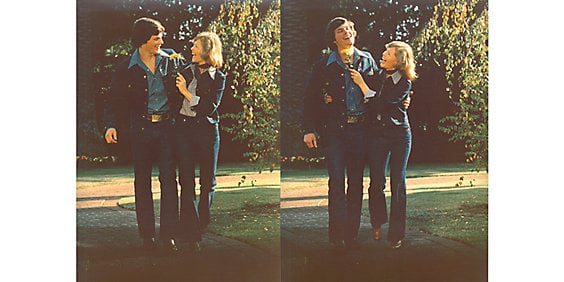
FIT FOR A KINGTHE LEISURE SUIT
Lee debuted the "Leesure" suit.
Pioneered by the knit five-pocket jean, the Lee "Leesure" Suit offered a sportier alternative to traditional office attire. Leesure Wear offered the consumer a well fitting, appropriately-styled garment made of the best possible fabric. Dry cleanable or machine washable, this garment was designed to give long and satisfactory service. The prices ranged from $4.95 to $7.95.
Show more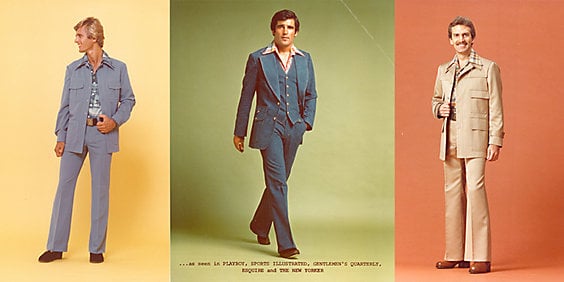
OVER THE RAINBOW
A Lee embroidered denim design became a fashion favorite.
Introduced as "Freeway Jeans" in a campaign featuring supermodel Shelly Hack, who later starred in Charlies Angels, the pants were often referred to as Lee's Rainbow Jean.
Show more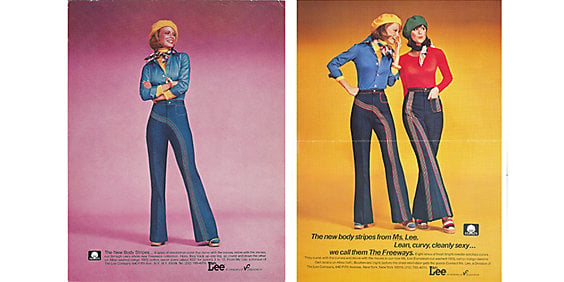
THE BRAND THAT FITS
Lee's new tagline "The Brand That Fits" was launched.
In the early 1980s, Lee released several new fits and fabrics for women, including the London Riders, which catered to women with fuller fits and a high-end stretch denim fabric. This positions the company to become the top-selling female jean manufacturer in the country.
Show more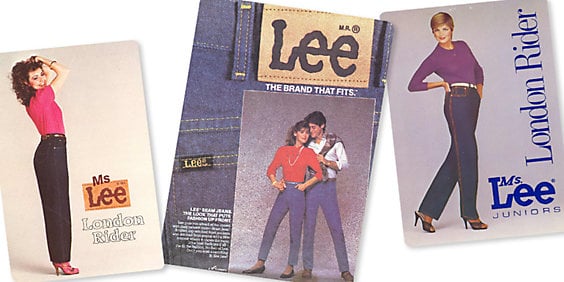
COVER OF ROLLING STONE
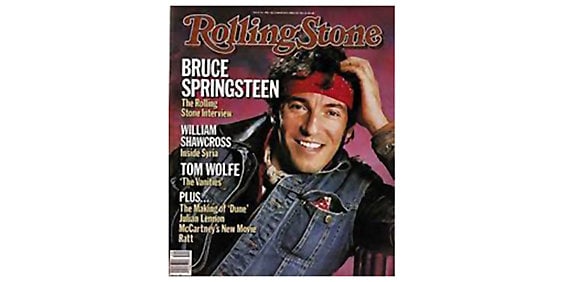
A Lee jean jacket made the cover of the Rolling Stone magazine adorning rock star Bruce Springsteen. It doesn't get much better than that.
RIDERS
Riders became a separate brand of “easy-going, honest clothes” designed specifically for the mass market, available at Wal-Mart and K-Mart.
MAKING A DIFFERENCELEE NATIONAL DENIM DAY
Lee created its National Denim Day to create awareness for breast cancer research.
Lee National Denim Day was the result of an internal team effort to find a cause that was of concern to both Lee consumers and employees. After extensive research, the answer became clear: breast cancer. Lee hired a celebrity spokesperson to promote Lee National Denim Day and promote breast cancer awareness. Companies that chose to participate asked employees to donate $5 in exchange for wearing jeans to work. From 1996 to 2015, the campaign raised more than $98 million. Beneficiaries included Susan G. Komen Breast Cancer Foundation, Women’s Cancer Programs of the Entertainment Industry Foundation andthe American Cancer Society.
Show more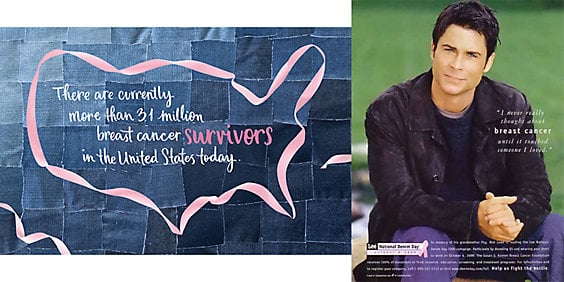
New Frontierthis site launches buy online
Consumers could now purchase their favorite jeans on this site.
Coinciding with Lee's online debut are Fit Finder kiosks—computers equipped with tape measures that help consumers determine which styles will fit them best—introduced in select stores. Sales in those stores double.
Show more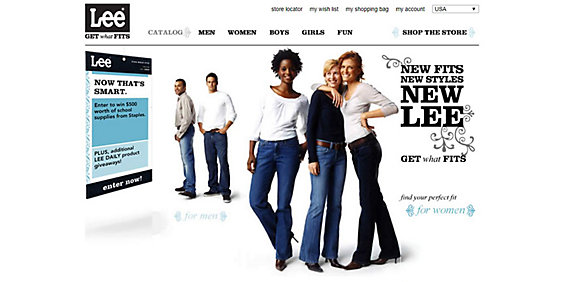
LEE PIPES
Lee introduces Pipes—a fit and style revolution for 8-12-year-old boys enjoying the extreme sports lifestyle.
With very wide legs for ease of movement, deep pockets and contrast stitching, the exaggerated silhouettes gave Pipes a look that aligned with the counter-culture attitude.
Show more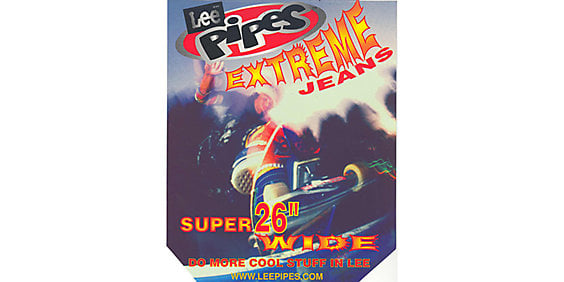
STRETCH FOR MENEXTREME MOTION JEANS
Lee began promoting its stretch fabrication in men's denim.
Launched in 2016, stretch denim fabrication paired with an innovative, hidden elastic waistband quickly catapulted Lee Extreme Motion as the fastest-growing model by 2018.
Show more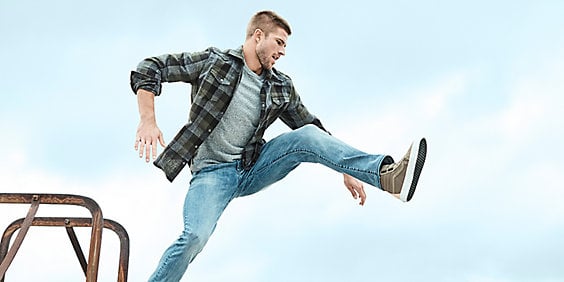
THEN IS NOWTHE LAUNCH OF LEE VINTAGE MODERN
Capitalizing on the heritage brand trend, Lee introduces a specialty denim collection inspired from our archives yet made with modern styling.
The seven icons include: The S-curve resembles the longhorns of a steer or the shape "of the back of an occupied saddle."
The X-tack replaced copper rivets on Lee jeans back pockets by 1938.
The spade pocket worked wonders to give shape and definition to the posterior.
The logo rivet received the addition of Lee's brand name in the 30s.
The logo button replaced the Lee Cowboy waistband button by 1949.
The hip pocket label, a small logo woven with goldenrod - colored thread, appeared after World War II on Lee 101 jackets and jeans.
The Lee leather patch was first introduced in 1945.
A NEW CHAPTERGREENSBORO, NORTH CAROLINA
After over 130 years in its founding state, Lee headquarters moved from Kansas to North Carolina.
As a part of the VF Corporation for nearly 50 years, Lee—along with Wrangler and Rock & Republic brands—Lee became part of a new, independent, publicly-traded company Kontoor Brands, moving their headquarters from Merriam, Kans. to Greensboro, N.C.
Show more